|
STRATO BRIEF
SPACE · POLICY · DEFENSE
June 23, 2026
10 stories · ~6 min read
|

|
|
Space Operations
SpaceNews reports that Rocket Lab has launched the Victus Haze Puma spacecraft to start a U.S. Space Force exercise focused on rapidly identifying and characterizing potential threats in orbit. The satellite flew on an Electron rocket from Mahia, New Zealand, under a $32 million Space Force contract awarded in 2024. After insertion into sun-synchronous orbit, it will be commissioned ahead of rendezvous and proximity operations with a second spacecraft operated by True Anomaly.
|
|
|
Space Operations & Technology
|
|
LAUNCH
Rocket Lab launched the Victus Haze Puma spacecraft for a Space Force exercise centered on quickly spotting and characterizing on-orbit threats. The mission will move into commissioning before beginning rendezvous and proximity operations with a spacecraft flown by True Anomaly.
|
|

TECH
Loft Orbital is working with NASA JPL on a NASA-funded effort to test AI software aboard Loft spacecraft for Earth science monitoring. Initial tests began this month, with follow-on demonstrations planned in 2027 and 2028 on future satellites.
|
|
|
|
Policy & Politics
|

POLICY
Breaking Defense reports that new executive orders direct the Defense Department to field three types of quantum sensors by 2028 while also supporting broader federal work on quantum computing and cybersecurity. The push aims to preserve a U.S. technical edge in areas including navigation under GPS jamming, secure communications and advanced sensing.
|

DIPLOMACY
The Hill reports that President Trump defended a new U.S.-Iran agreement that would allow sanctions relief and reopen the Strait of Hormuz, saying released funds would remain in U.S.-controlled escrow. He said the money would be limited to purchases of food and medical supplies, framing the arrangement as a controlled step rather than a broad financial concession.
|

SECURITY
A new Mitchell Institute report says Washington still lacks clear policy for identifying escalation and choosing responses when adversaries act aggressively in space below the threshold of open conflict. The study, based on a workshop with military, government, industry and allied participants, argues that space is no longer a benign domain and that policy ambiguity is becoming a strategic weakness.
|
|
|
Aerospace Industry
|

PARTNERSHIP
Satellogic and SynMax are pairing satellite imagery with analytics to create AI-driven intelligence products for defense and intelligence customers. The partnership reflects a broader industry move away from selling raw imagery toward continuous monitoring, alerting and fused intelligence services.
|
PROGRAM
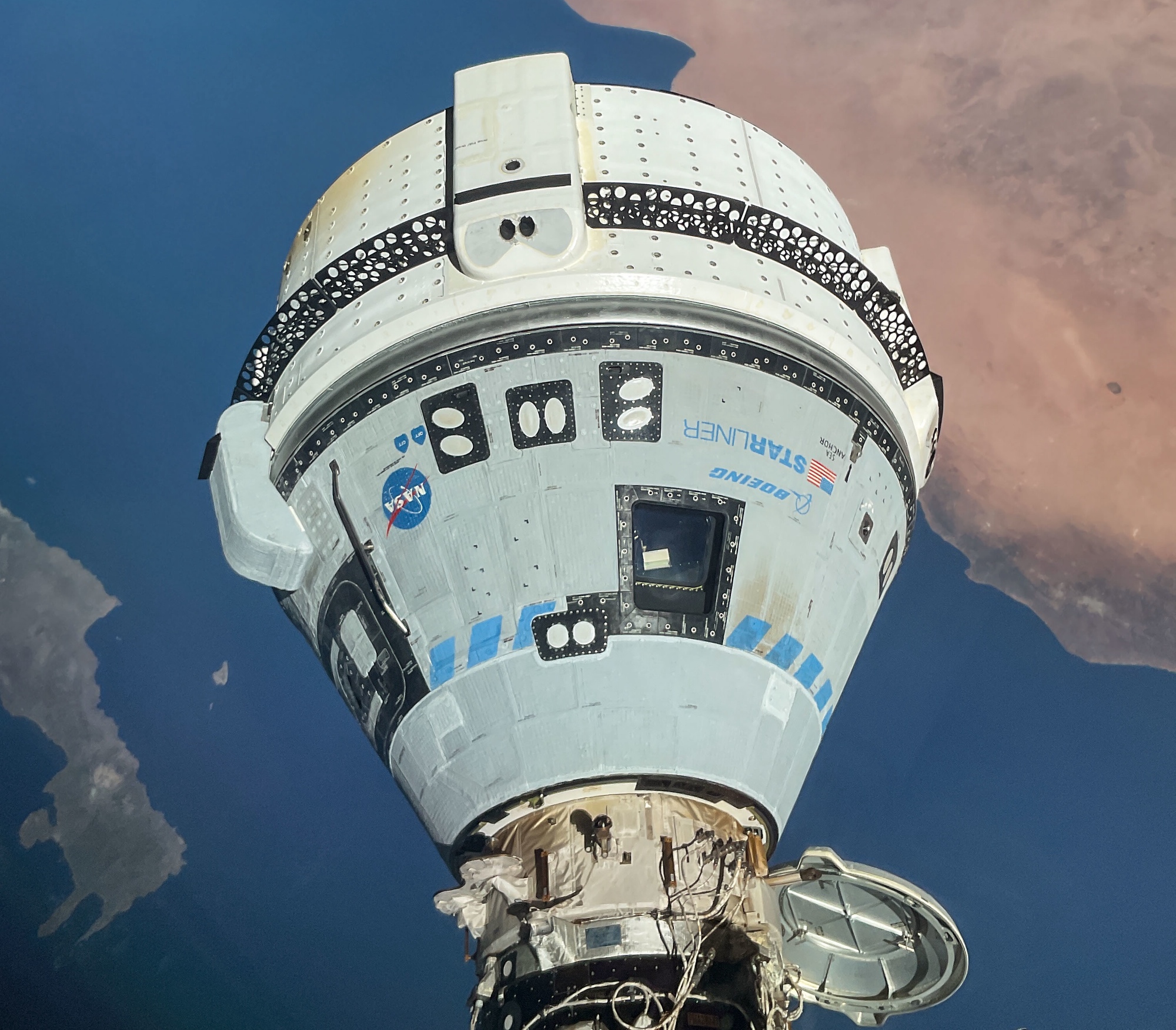
NASA safety advisers say Boeing is making progress on Starliner fixes, but the vehicle could still be as much as a year away from flying again. There is no firm schedule yet for the uncrewed Starliner-1 test flight as teams continue working through technical issues identified after the crew flight test.
|
|
|
Geopolitics & Defense
|

CHINA
SpaceNews reports that procurement documents, delivered hardware and launch-pad planning all point to Chinese work on a new 7-meter-class reusable rocket. The vehicle would sit between smaller current systems and the larger Long March 9 effort, potentially strengthening China’s launch cadence and heavy-lift capacity for strategic missions.
|

DEFENSE
USNI News reports that the Liaoning carrier strike group has returned to Qingdao after a 40-day deployment through the South China Sea and Philippine Sea. The deployment underscores Beijing’s continuing carrier operations in contested waters and highlights the steady normalization of Chinese naval power projection in the Western Pacific.
|
|
|
|
|
STRATO BRIEF
|