|
STRATO BRIEF
SPACE · POLICY · DEFENSE
July 10, 2026
11 stories · ~7 min read
|

|
|
Space Operations
China launched the Long March 10B and recovered its first stage, a major step in the country's reusable launch program. The recovery milestone narrows the gap with U.S. commercial launch practices and gives China a clearer path toward higher-cadence orbital operations. For defense and civil-space planners, the key signal is not one flight but the acceleration of reusable infrastructure across a state-backed launch ecosystem.
|
|
|
Space Operations & Technology
|

POWER
City Labs is flying a mission to validate a tritium-powered electrical source for satellites and lunar systems. The technology is aimed at operations where solar power is weak, intermittent, or operationally constrained. If demonstrated, the approach could support long-duration sensors, cislunar infrastructure, and small payloads that need dependable low-power energy.
|
|

REENTRY
Japan's ElevationSpace is signing customers and preparing its first commercial reentry mission. The company is positioning its vehicle for payload return services while monitoring SpaceX's moves in the same market. The development adds another entrant to the emerging logistics layer around in-space manufacturing, microgravity research, and orbital return.
|
|
ISS
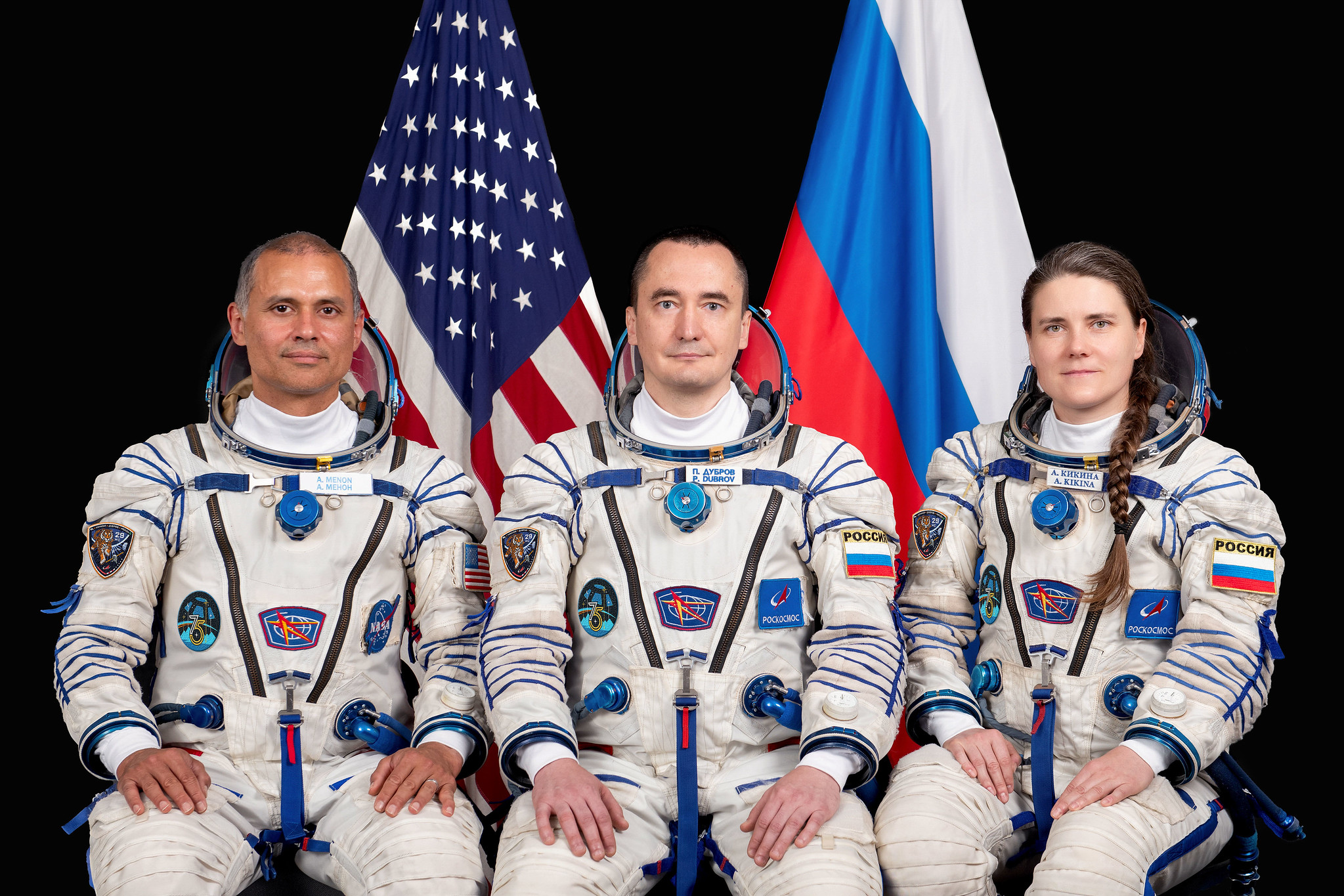
NASA announced coverage plans for astronaut Anil Menon's July 14 launch aboard Soyuz MS-29 with cosmonauts Pyotr Dubrov and Anna Kikina. The mission will join Expedition 74 on the International Space Station. The flight keeps crew rotation and station research on schedule while U.S., Russian, and partner operations continue through a complex policy environment.
|
|
|
Policy & Politics
|

PENTAGON
The Pentagon released a fourth volume of UFO-related files, including 40 new records and 19 videos. The disclosure keeps unidentified anomalous phenomena in the policy spotlight and adds more public material for lawmakers, researchers, and defense observers. The near-term impact is transparency-oriented, but the long-running issue remains tied to sensor reliability, airspace security, and classification policy.
|

LAUNCH POLICY
The Interior Department is seeking information on concepts for offshore orbital launch operations. The request is part of a broader effort to understand alternatives to congested land-based spaceports. If the market responds with feasible concepts, offshore launch could become a regulatory and infrastructure issue for commercial launch providers and coastal stakeholders.
|
|
|
Aerospace Industry
|

MARKET
Eurospace reported that European space industry sales rebounded in 2025 after a contraction in 2024. Earth observation overtook telecommunications as a sales driver, reflecting demand for imaging, environmental monitoring, and security-relevant data. The mix shift is important for suppliers because it points toward more distributed payload demand rather than a telecom-led commercial cycle.
|

CHINA
A Chinese government body published a membership list for a national commercial space consortium. The list offers a rare view into which firms Beijing views as established players in its state-backed commercial ecosystem. For outside observers, the disclosure helps map China's industrial base and the boundary between private initiative and government-directed space capacity.
|

CONTRACTS
Germany-based The Exploration Company created TEC Federal, a U.S. entity intended to compete for government programs and contracts. The move signals that international space-transport startups see U.S. civil and defense procurement as central to growth. It also shows how non-U.S. firms are adapting corporate structure to access federal opportunities.
|
|
|
Geopolitics & Defense
|
|
PACIFIC
USNI's weekly Western Pacific update reported major ship movements and exercises, including RIMPAC 2026 activity moving into its at-sea phase. The update is a useful snapshot of allied naval presence, unmanned systems activity, and exercise tempo in the Pacific. The operational pattern matters for space and defense readers because maritime posture increasingly depends on resilient sensing, communications, and targeting networks.
|

BMC3I
Catalyst Campus and the BMC3I TAP Lab Colorado announced a multi-phase program to connect commercial innovators with government mission needs. The shift from an SDA-focused lab toward BMC3I reflects demand for battle management, command, control, communications, and intelligence integration. The program is another sign that defense space modernization is moving beyond satellites alone into the software, data, and mission-integration layer.
|
|
|
|
|
STRATO BRIEF
|